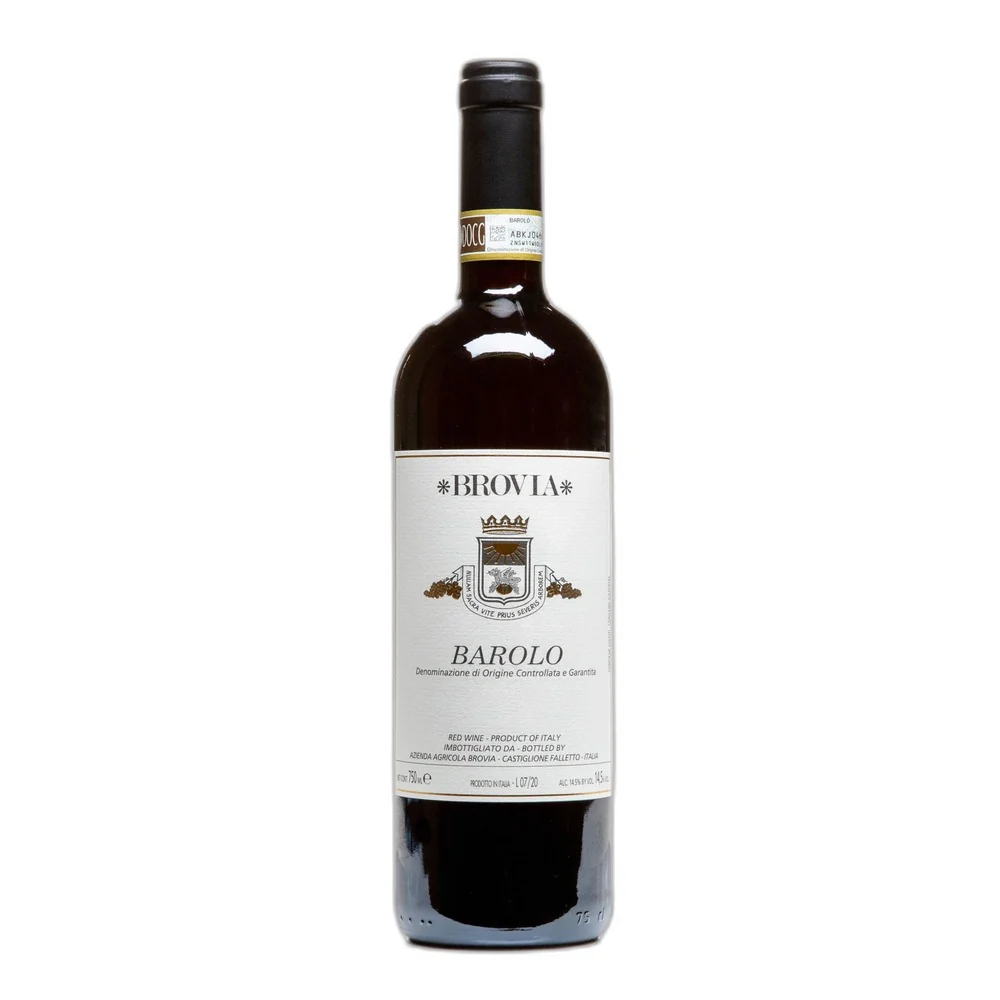
Brovia Barolo 2021
points Kerin O'Keefe
Violet, dog rose, dark spice and crushed mint are just some of the aromas you’ll find on the perfumed 2021 Barolo from Brovia. Made with Nebbiolo from the estate’s holdings in Castiglione Falletto and Serralunga, the delicious palate delivers layers of cherry, strawberry compote, orange zest and star anise. Aged for one year longer than their cru bottlings and in larger casks of 100hl, it’s elegantly structured and already accessible, with polished tannins that provide seamless support. It’s also well balanced, with fresh acidity. Drink 2027–2036.
This cuvée is a blend of the younger vines found in the various crus. Since its inception, the Barolo has offered a stylish take on the Brovia approach to this appellation. There is never excess here, no attempt to showboat or to flaunt an image of power. Above all, balance is the key element in faithfully rendering a Barolo of great stature. You will find here the classic grainy tannins, the long, mineral-inflected finish, the aromas of late-summer roses and flavors of dried cherries. After a fermentation of approximately three weeks, the wine is aged for at least two years in a combination of large and medium-sized barrels of Slavonian and French origin. Production averages 13,000 bottles.
Brovia
Castiglione Falletto, Barolo
Brovia's modern era has been red hot for the last 10 years, while being an under-the-radar estate for 25 years or so before that. I champion these traditional wines as some of my favorites from Barolo that are at the least available to purchase and where pricing has not gone nutzo.
In 1863 Giacinto Brovia founded the Brovia estate in the village of Castiglione Falletto, in the heart of the Barolo district. The family has been continually engaged in the growing of grapes and the production of wine since that time. The phylloxera plague, economic upheaval and two wars interrupted production for almost 30 years but, in 1953 they resumed full-scale wine production.
The Brovia wines are vinified in the classic style with longer macerations over a month, sometimes up to 2 months. The Barolo are aged for at least two years in large, neutral 30 hectoliter barrels of Slavonian oak. The wines are then bottled without filtration and released after 18 to 24 months of bottle-aging.
Description
points Kerin O'Keefe
Violet, dog rose, dark spice and crushed mint are just some of the aromas you’ll find on the perfumed 2021 Barolo from Brovia. Made with Nebbiolo from the estate’s holdings in Castiglione Falletto and Serralunga, the delicious palate delivers layers of cherry, strawberry compote, orange zest and star anise. Aged for one year longer than their cru bottlings and in larger casks of 100hl, it’s elegantly structured and already accessible, with polished tannins that provide seamless support. It’s also well balanced, with fresh acidity. Drink 2027–2036.
This cuvée is a blend of the younger vines found in the various crus. Since its inception, the Barolo has offered a stylish take on the Brovia approach to this appellation. There is never excess here, no attempt to showboat or to flaunt an image of power. Above all, balance is the key element in faithfully rendering a Barolo of great stature. You will find here the classic grainy tannins, the long, mineral-inflected finish, the aromas of late-summer roses and flavors of dried cherries. After a fermentation of approximately three weeks, the wine is aged for at least two years in a combination of large and medium-sized barrels of Slavonian and French origin. Production averages 13,000 bottles.
Brovia
Castiglione Falletto, Barolo
Brovia's modern era has been red hot for the last 10 years, while being an under-the-radar estate for 25 years or so before that. I champion these traditional wines as some of my favorites from Barolo that are at the least available to purchase and where pricing has not gone nutzo.
In 1863 Giacinto Brovia founded the Brovia estate in the village of Castiglione Falletto, in the heart of the Barolo district. The family has been continually engaged in the growing of grapes and the production of wine since that time. The phylloxera plague, economic upheaval and two wars interrupted production for almost 30 years but, in 1953 they resumed full-scale wine production.
The Brovia wines are vinified in the classic style with longer macerations over a month, sometimes up to 2 months. The Barolo are aged for at least two years in large, neutral 30 hectoliter barrels of Slavonian oak. The wines are then bottled without filtration and released after 18 to 24 months of bottle-aging.