Cascina Baricchi 'Quindicianni' Barbaresco Riserva DOCG 2010
93 pts Vinous (Galloni)
Drinking Window 2025 - 2035
The 2010 Barbaresco Riserva Quindicianni is a powerful, virile wine. Leather, dried herbs, tobacco, incense and licorice add to an initial impression of savory/earthy intensity. I am not sure the tannins will ever fully soften here. - By Antonio Galloni on October 2025
Natale and Francesca Simonetta turn out some of the most distinctive wines in Barbaresco. Their wines, released later than most, give consumers an opportunity to taste wines with a bit of bottle age, something that is so essential for fine Barbaresco. Their Barbaresco Riserva Rose delle Casasse, made from the rare Nebbiolo Rose clone, is one of the most singular wines in the entire appellation.
Vines planted: early 1970s.
Planting density: approximately 4,000 vines/ha - average production 1.5 kg per plant.
Soil: A mix of clay with some limestone, chalk and sand.
Viticulture: In general the farming is practicing organic although they will intervene as minimally as possible should the vintage require it.
Bottles produced: approximately 4,000.
Vinification: destemming, controlled fermentation in stainless steel tanks, maceration for approximately ten days using the total pumping over technique, performing a complete racking whenever the cap shows signs of consolidation, using a support tank and covering the cap that has now settled to the bottom due to alluvium.
Aging: 80% of the wine remains in 500-liter untoasted Hungarian oak tonneaux, the remainder in old French Allier barriques, all for 36 months. Released 15 years after the vintage.
Natale Simonetta
&
Cascina Baricchi
Grower and winemaker, Natale Simonetta, whose great-grandfather was Angelo Gaja’s grandfather, is the brave soul shepaharding . But unlike the Gajas—who’ve been growers for 150+ years—Natale’s family bought their first vines in 1979, when they acquired the Cascina Baricchi estate.
At first, they only made wine to sell to local families and restaurants in demijohn. But that was enough to inspire Natale to attend France’s highly regarded Montpellier wine school, followed by stages in Champagne and Burgundy. Those experiences—coupled with his genes—produced one of the most inquisitive, yet traditional, winemakers in the Langhe.
He takes full advantage of Casasse’s windswept exposure to farm his vines naturally. The cool aspect also increases the grape’s hangtime, allowing the development of greater complexity. This allows him to pick as much as three weeks after his neighbors, yet at lower sugar levels.
A Rare Nebbiolo Variant
The most unique thing about the Barbaresco wines, besides it being hard to find, is that it is made from 114 year-old vines of a rarely seen variant of the Nebbiolo grape: Nebbiolo Rose. The wine is made from just twenty rows of Nebbiolo Rosé mostly planted in 1913 on a west-facing slope of clay, sand-and-limestone Sant’ Agata marl, on the border of Neive and Neviglie. Vines this old are almost non-existent in the Langhe, and old Nebbiolo Rosé vines are rarer still, making this is a Barbaresco treasure. These vines represent one of the last ancient plantings of a distinct Piemontese grape variety.
Though a component of many great Barolos and Barbarescos of the past, Nebbiolo Rose suffered from tiny yields and relatively light color—hence the variety’s name. Yet, these deficiencies were more than made up for by the wines’ sensual texture and haunting perfume. Sadly, Nebbiolo Rosé all but died out, replaced by Nebbiolo clones known for their productivity and deeper color (the Lampia variant). By the late 1970s, only a handful of producers still grew it, including two giants of the past. One was Vietti’s Alfredo Currado—in Barolo's Briacca cru—and the other was Enrico Giovannini-Moresco, whose Barbaresco Podere del Pajoré was entirely planted to Nebbiolo Rosé. Sadly, neither wine was made after 1982.
Fortunately, proprietor of Cascina Baricchi, Natale Simonetta, has today emerged as the clone’s great champion. When Natale took over in 1989, the estate was blessed with a parcel of 100+year-old Rosé vines in the historic, but unclassified, Casasse cru. Natale slowly experimented with this variety on its own, releasing only 3 vintages of Rosé delle Casasse before 2010, but the wine’s haunting personality drew him in, and it slowly became the focus of his work.
Winemaking
The winemaking here is very traditional, with long macerations and patient aging in neutral barrels (most producers are selling the 2021 vintage). In the cellar, Natale crushes the grapes by foot for the gentlest extraction possible. He then ferments and macerates for 30+ days, using the ultra-traditional capello sommerso for the last couple weeks. That gives the wine its firm structure. To maximize the wine’s expressiveness, Natale gives it three years aging in used 500 to 800-liter barrels, followed by bottling with a minimum of sulfur.
My personal experience with these wines is great, they are classically styled, with fresh red fruits, spices, and loads of the rose petal aromatics that Nebbiolo at its finest should exude in its perfume and palate. On the palate you have the classic acidity and tannin structure of a moderately young Nebbiolo. But don’t take my word for it, the critics love these wines too as you’ll see below.
Original: $179.99
-70%$179.99
$54.00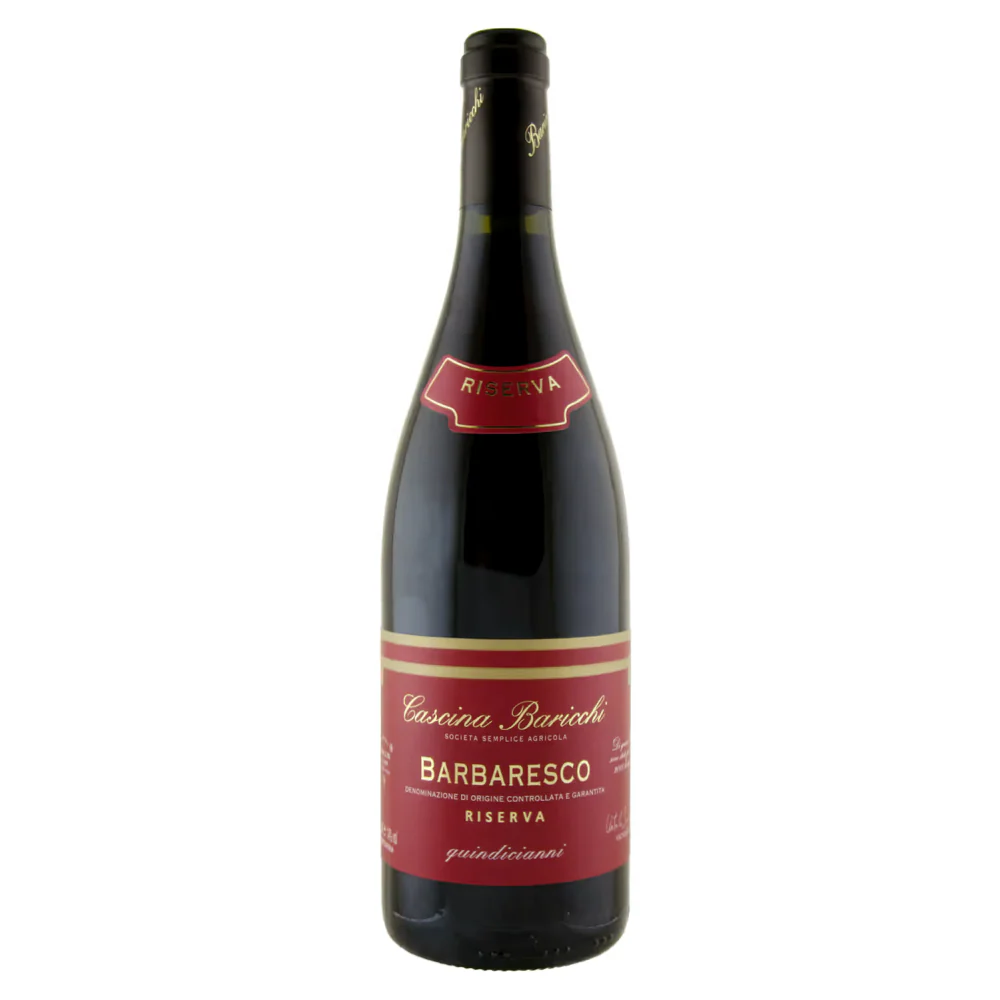
Description
93 pts Vinous (Galloni)
Drinking Window 2025 - 2035
The 2010 Barbaresco Riserva Quindicianni is a powerful, virile wine. Leather, dried herbs, tobacco, incense and licorice add to an initial impression of savory/earthy intensity. I am not sure the tannins will ever fully soften here. - By Antonio Galloni on October 2025
Natale and Francesca Simonetta turn out some of the most distinctive wines in Barbaresco. Their wines, released later than most, give consumers an opportunity to taste wines with a bit of bottle age, something that is so essential for fine Barbaresco. Their Barbaresco Riserva Rose delle Casasse, made from the rare Nebbiolo Rose clone, is one of the most singular wines in the entire appellation.
Vines planted: early 1970s.
Planting density: approximately 4,000 vines/ha - average production 1.5 kg per plant.
Soil: A mix of clay with some limestone, chalk and sand.
Viticulture: In general the farming is practicing organic although they will intervene as minimally as possible should the vintage require it.
Bottles produced: approximately 4,000.
Vinification: destemming, controlled fermentation in stainless steel tanks, maceration for approximately ten days using the total pumping over technique, performing a complete racking whenever the cap shows signs of consolidation, using a support tank and covering the cap that has now settled to the bottom due to alluvium.
Aging: 80% of the wine remains in 500-liter untoasted Hungarian oak tonneaux, the remainder in old French Allier barriques, all for 36 months. Released 15 years after the vintage.
Natale Simonetta
&
Cascina Baricchi
Grower and winemaker, Natale Simonetta, whose great-grandfather was Angelo Gaja’s grandfather, is the brave soul shepaharding . But unlike the Gajas—who’ve been growers for 150+ years—Natale’s family bought their first vines in 1979, when they acquired the Cascina Baricchi estate.
At first, they only made wine to sell to local families and restaurants in demijohn. But that was enough to inspire Natale to attend France’s highly regarded Montpellier wine school, followed by stages in Champagne and Burgundy. Those experiences—coupled with his genes—produced one of the most inquisitive, yet traditional, winemakers in the Langhe.
He takes full advantage of Casasse’s windswept exposure to farm his vines naturally. The cool aspect also increases the grape’s hangtime, allowing the development of greater complexity. This allows him to pick as much as three weeks after his neighbors, yet at lower sugar levels.
A Rare Nebbiolo Variant
The most unique thing about the Barbaresco wines, besides it being hard to find, is that it is made from 114 year-old vines of a rarely seen variant of the Nebbiolo grape: Nebbiolo Rose. The wine is made from just twenty rows of Nebbiolo Rosé mostly planted in 1913 on a west-facing slope of clay, sand-and-limestone Sant’ Agata marl, on the border of Neive and Neviglie. Vines this old are almost non-existent in the Langhe, and old Nebbiolo Rosé vines are rarer still, making this is a Barbaresco treasure. These vines represent one of the last ancient plantings of a distinct Piemontese grape variety.
Though a component of many great Barolos and Barbarescos of the past, Nebbiolo Rose suffered from tiny yields and relatively light color—hence the variety’s name. Yet, these deficiencies were more than made up for by the wines’ sensual texture and haunting perfume. Sadly, Nebbiolo Rosé all but died out, replaced by Nebbiolo clones known for their productivity and deeper color (the Lampia variant). By the late 1970s, only a handful of producers still grew it, including two giants of the past. One was Vietti’s Alfredo Currado—in Barolo's Briacca cru—and the other was Enrico Giovannini-Moresco, whose Barbaresco Podere del Pajoré was entirely planted to Nebbiolo Rosé. Sadly, neither wine was made after 1982.
Fortunately, proprietor of Cascina Baricchi, Natale Simonetta, has today emerged as the clone’s great champion. When Natale took over in 1989, the estate was blessed with a parcel of 100+year-old Rosé vines in the historic, but unclassified, Casasse cru. Natale slowly experimented with this variety on its own, releasing only 3 vintages of Rosé delle Casasse before 2010, but the wine’s haunting personality drew him in, and it slowly became the focus of his work.
Winemaking
The winemaking here is very traditional, with long macerations and patient aging in neutral barrels (most producers are selling the 2021 vintage). In the cellar, Natale crushes the grapes by foot for the gentlest extraction possible. He then ferments and macerates for 30+ days, using the ultra-traditional capello sommerso for the last couple weeks. That gives the wine its firm structure. To maximize the wine’s expressiveness, Natale gives it three years aging in used 500 to 800-liter barrels, followed by bottling with a minimum of sulfur.
My personal experience with these wines is great, they are classically styled, with fresh red fruits, spices, and loads of the rose petal aromatics that Nebbiolo at its finest should exude in its perfume and palate. On the palate you have the classic acidity and tannin structure of a moderately young Nebbiolo. But don’t take my word for it, the critics love these wines too as you’ll see below.