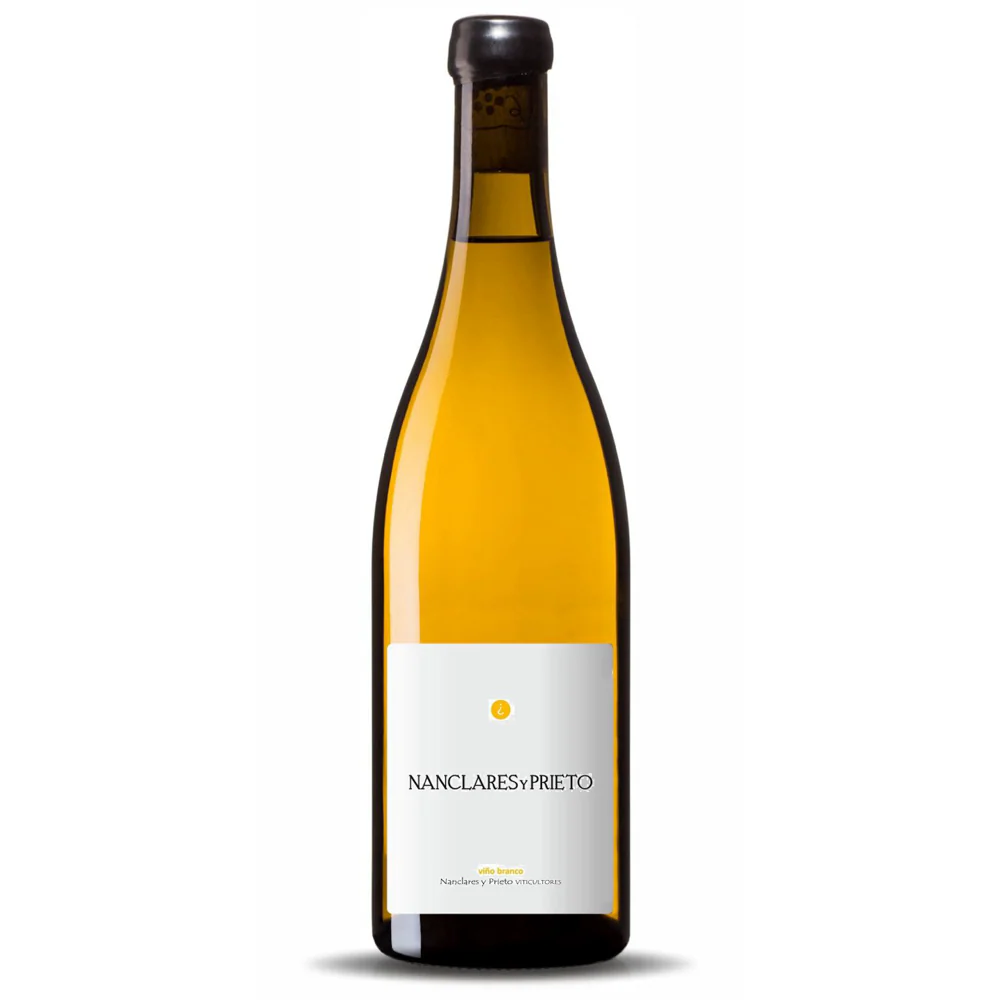
Nanclares y Prieto Vino Blanco 2024
93 points Wine Advocate
The new white 2024 Nanclares y Prieto Viño Branco was produced with Albariño from 76 different vineyards in the Salnés and Condado. It fermented with indigenous yeasts after pressing the full clusters and matured with lees for eight months. It's very pale and young but already showing the harmony, balance and nuance of the very challenging 2024 vintage. It's clean, precise, mineral and elegant, with a gentle and soft finish, coming through as completely balanced in all senses. It has 12.8% alcohol, a pH of 3.45 and 7.4 grams of acidity. I think this is a noteworthy addition to the portfolio. 13,854 bottles and 200 magnums produced. It was bottled in May 2025.
Blanco is Albariño from a collection of 67 plots in the villages of Salnés and Condado zones. The vines are 15-95 years old and planted on sandy decomposed granite, clay and alluvial soils. The grapes are harvested by hand, sorted, and gently pressed in whole-bunches using a pneumatic press. The juice ferments with its native yeasts in stainless steel tank plus 5% neutral French oak barrel, then rests on the lees for around 8 months, with weekly batonnage for the first 3 months.
Winery: Alberto Nanclares and Silvia Prieto make transparent, Atlantic-influenced wines, mainly with Albariño from old vines around the village of Cambados. Employing organic farming practices and a restrained hand in the cellar, the pair have managed something very rare: the refinement of Albariño into angular, age-worthy wines that express the fascinating terruños of Cambados and Rías Baixas. Alberto and Silvia currently own 5 hectares of Albariño in the Val do Salnés, all trained in the traditional Pergola style and divided into 12 small parcels in the parroquias of Castrelo (South Cambados), Vilariño (North Cambados) and Padrenda (North Meaño). The essence of their approach is reverence for the vineyard, from organic farming to fermentation by native yeasts. To express the edginess of the naturally high in acidity Albariño grape, he eschews adding potassium, which is what many in Rías Baixas use to de-acidify and soften their wines. Malolactic fermentation rarely occurs, and the wines spend a good amount of time (often a year or more) on their lees before being bottled without clarification or filtration.
Description
93 points Wine Advocate
The new white 2024 Nanclares y Prieto Viño Branco was produced with Albariño from 76 different vineyards in the Salnés and Condado. It fermented with indigenous yeasts after pressing the full clusters and matured with lees for eight months. It's very pale and young but already showing the harmony, balance and nuance of the very challenging 2024 vintage. It's clean, precise, mineral and elegant, with a gentle and soft finish, coming through as completely balanced in all senses. It has 12.8% alcohol, a pH of 3.45 and 7.4 grams of acidity. I think this is a noteworthy addition to the portfolio. 13,854 bottles and 200 magnums produced. It was bottled in May 2025.
Blanco is Albariño from a collection of 67 plots in the villages of Salnés and Condado zones. The vines are 15-95 years old and planted on sandy decomposed granite, clay and alluvial soils. The grapes are harvested by hand, sorted, and gently pressed in whole-bunches using a pneumatic press. The juice ferments with its native yeasts in stainless steel tank plus 5% neutral French oak barrel, then rests on the lees for around 8 months, with weekly batonnage for the first 3 months.
Winery: Alberto Nanclares and Silvia Prieto make transparent, Atlantic-influenced wines, mainly with Albariño from old vines around the village of Cambados. Employing organic farming practices and a restrained hand in the cellar, the pair have managed something very rare: the refinement of Albariño into angular, age-worthy wines that express the fascinating terruños of Cambados and Rías Baixas. Alberto and Silvia currently own 5 hectares of Albariño in the Val do Salnés, all trained in the traditional Pergola style and divided into 12 small parcels in the parroquias of Castrelo (South Cambados), Vilariño (North Cambados) and Padrenda (North Meaño). The essence of their approach is reverence for the vineyard, from organic farming to fermentation by native yeasts. To express the edginess of the naturally high in acidity Albariño grape, he eschews adding potassium, which is what many in Rías Baixas use to de-acidify and soften their wines. Malolactic fermentation rarely occurs, and the wines spend a good amount of time (often a year or more) on their lees before being bottled without clarification or filtration.