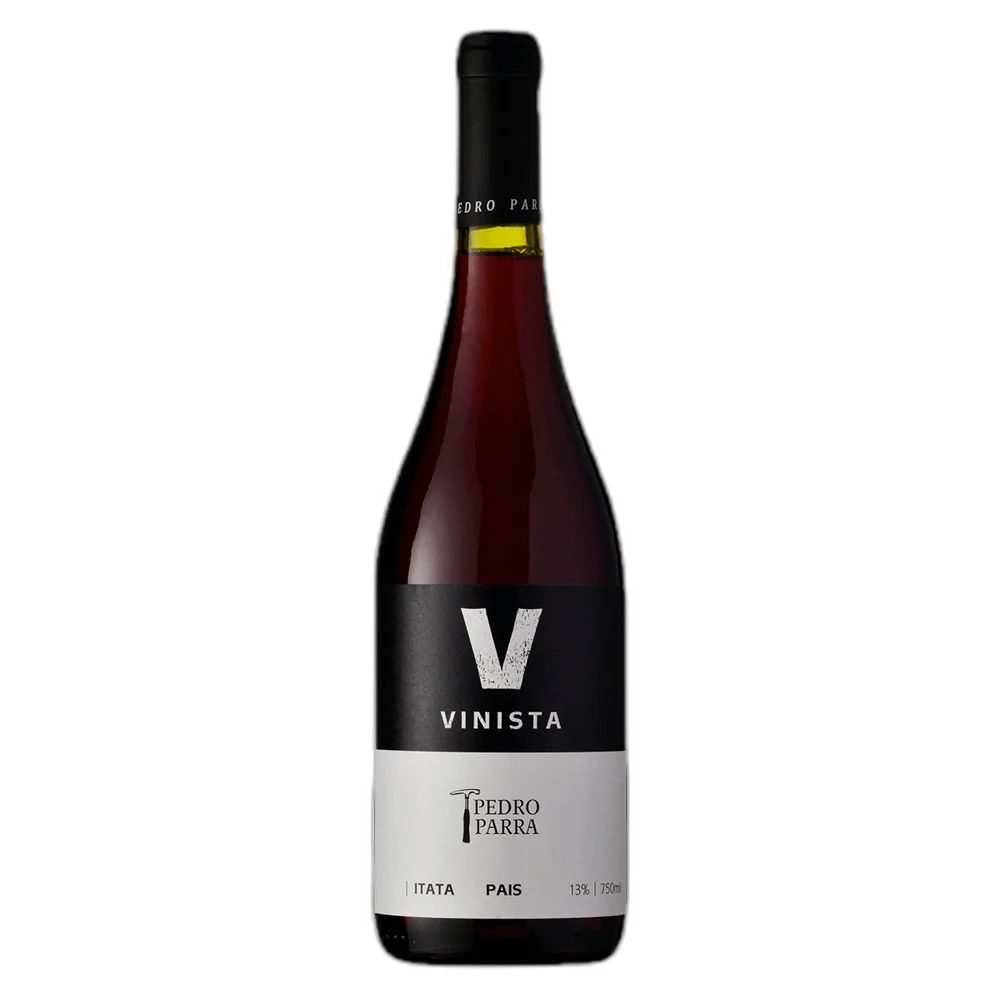
Pedro Parra y Familia - Vinista 2023
$22.99 on 12+ bottles (code: 12saves3)
$23.99 on 6+ bottles (code: 6saves2)
2022: 93 pts Wine Advocate - Robert Parker (2023, NYR)
The 2022 Vinista hails from four vineyards, two planted on granite in Guarilihue and two on dark, sandy volcanic soils in Ñipas. It opens with a highly floral and slightly medicinal nose that introduces a soft, delicate palate with a higher degree of precision than typically associated with the variety. It concludes with a spry, powdery and perfumed finish. This is a dramatically overperforming and serious expression of País.
- 100% País
- Sourced from dry-farmed different vineyards: 2 granitic vineyards in the area of Guarilihue Alto and 2 black silty basalt vineyards in Ñipas
- Hand harvested
- 60% whole cluster fermentation with indigenous yeast in open oak and steel tanks
- Aged in concrete and large oak casks for 1 year
In Summary on Pedro Parra, The Wine Advocate, Matthew Luczy
It should come as no surprise that one of the world's leading terroir experts, possessing deep knowledge of the world's finest regions and, within them, its most iconic vineyards, would also produce compelling, transparent wines that faithfully reflect their origins. This is undeniably the case with Pedro Parra. Since establishing his label in 2014, he has steadily developed an impeccable portfolio that holds up a mirror to Itata and reflects it directly into the glass. A tasting through this roster is a masterclass in transparency, attention to detail and ceaseless dedication to quality above all else.
Parra focuses almost primarily on Cinsault—the "Pinot Noir" of Itata, as he sees it—and País, which he equates to Trousseau, along with a small amount of Chardonnay still under development. Parra's roster centers around five cru bottlings hailing from approximately 0.25- to 0.50-hectare sites in the uppermost section of Guarilihue planted to Cinsault 45 to 70 years ago on decomposed granitic soils with varying degrees of silt, sand, quartz and mica content and dramatically different topsoil depths. An additional pair of vineyards in Ñipas supply extremely old País, one of them 150 years old, expressed in the superb Bluepit bottling.
In the cellar, Parra has gradually moved to more whole-cluster fermentations for Cinsault and practices extremely long macerations of up to 60 days with as little cap manipulation as possible. He utilizes a reverse saignée method—in which a portion of grapes are pressed and the juice immediately returned to the fermentation, resulting in a proportional reduction in skin contact—to reduce fruit flavors in the finished wines. Fermentations are cool and primarily occur in concrete vats, as does maturation, although the more grippy bottlings see élevage in foudre. Sulfur additions along the way are pragmatic, and the finished wines are typically bottled with about 20 parts per million of free sulfur. His País bottlings typically undergo warmer fermentations, 30-day macerations and aging in foudre. Published: Mar 27, 2025
Description
$22.99 on 12+ bottles (code: 12saves3)
$23.99 on 6+ bottles (code: 6saves2)
2022: 93 pts Wine Advocate - Robert Parker (2023, NYR)
The 2022 Vinista hails from four vineyards, two planted on granite in Guarilihue and two on dark, sandy volcanic soils in Ñipas. It opens with a highly floral and slightly medicinal nose that introduces a soft, delicate palate with a higher degree of precision than typically associated with the variety. It concludes with a spry, powdery and perfumed finish. This is a dramatically overperforming and serious expression of País.
- 100% País
- Sourced from dry-farmed different vineyards: 2 granitic vineyards in the area of Guarilihue Alto and 2 black silty basalt vineyards in Ñipas
- Hand harvested
- 60% whole cluster fermentation with indigenous yeast in open oak and steel tanks
- Aged in concrete and large oak casks for 1 year
In Summary on Pedro Parra, The Wine Advocate, Matthew Luczy
It should come as no surprise that one of the world's leading terroir experts, possessing deep knowledge of the world's finest regions and, within them, its most iconic vineyards, would also produce compelling, transparent wines that faithfully reflect their origins. This is undeniably the case with Pedro Parra. Since establishing his label in 2014, he has steadily developed an impeccable portfolio that holds up a mirror to Itata and reflects it directly into the glass. A tasting through this roster is a masterclass in transparency, attention to detail and ceaseless dedication to quality above all else.
Parra focuses almost primarily on Cinsault—the "Pinot Noir" of Itata, as he sees it—and País, which he equates to Trousseau, along with a small amount of Chardonnay still under development. Parra's roster centers around five cru bottlings hailing from approximately 0.25- to 0.50-hectare sites in the uppermost section of Guarilihue planted to Cinsault 45 to 70 years ago on decomposed granitic soils with varying degrees of silt, sand, quartz and mica content and dramatically different topsoil depths. An additional pair of vineyards in Ñipas supply extremely old País, one of them 150 years old, expressed in the superb Bluepit bottling.
In the cellar, Parra has gradually moved to more whole-cluster fermentations for Cinsault and practices extremely long macerations of up to 60 days with as little cap manipulation as possible. He utilizes a reverse saignée method—in which a portion of grapes are pressed and the juice immediately returned to the fermentation, resulting in a proportional reduction in skin contact—to reduce fruit flavors in the finished wines. Fermentations are cool and primarily occur in concrete vats, as does maturation, although the more grippy bottlings see élevage in foudre. Sulfur additions along the way are pragmatic, and the finished wines are typically bottled with about 20 parts per million of free sulfur. His País bottlings typically undergo warmer fermentations, 30-day macerations and aging in foudre. Published: Mar 27, 2025